For many patients, hearing the word “cavity” immediately brings to mind needles, drilling and a dental filling. While fillings remain necessary for many cavities, advances in preventive dentistry now make it possible to treat certain early areas of decay before drilling is required.
Holmes Dental offers Curodont Repair Fluoride Plus in Fort Collins as a minimally invasive treatment for qualifying early cavities. It works below the enamel surface to support remineralization while preserving healthy tooth structure.
The important word is “early.” Curodont cannot replace every filling, but when decay is detected before the tooth surface breaks down, it may provide another way to protect the tooth.
Can an Early Cavity Really Heal Without a Filling?
Certain early cavities can be remineralized without drilling. These are known as incipient or non-cavitated lesions.
At this stage, acids produced by cavity-causing bacteria have removed minerals from the enamel, but the outer surface of the tooth has not yet developed a physical hole. The weakened area may appear as a chalky white spot, show up between teeth on an X-ray or be identified through other diagnostic methods.
Because the enamel surface is still intact, minerals may be added back into the weakened area. Treatments such as fluoride, improved oral hygiene and dietary changes have traditionally been used to encourage this process.
Curodont adds another tool by creating a framework within the early lesion that supports mineral formation beneath the enamel surface.
Once decay has created a hole or progressed more deeply into the tooth, remineralization cannot replace the missing tooth structure. A filling or another restorative treatment may still be necessary.
What Is Curodont Repair Fluoride Plus?
Curodont is a drill-free treatment designed specifically for early, non-cavitated tooth decay. It combines fluoride with a self-assembling peptide known as P11-4.
When applied to an appropriate lesion, the peptide enters the microscopic pores in the weakened enamel. It then forms a three-dimensional scaffold within the lesion. Calcium and phosphate from saliva can collect around this framework and contribute to the formation of new hydroxyapatite crystals, one of the principal mineral components of enamel.
This process is sometimes called guided enamel remineralization or guided hydroxyapatite generation.
Rather than removing weakened enamel and replacing it with filling material, Curodont is designed to strengthen the tooth from within while preserving its natural structure.
How Is Curodont Different From Fluoride?
Fluoride remains an essential part of cavity prevention. It helps strengthen enamel, replace minerals lost during acid exposure and make the tooth more resistant to future attacks.
Curodont Repair Fluoride Plus includes fluoride, but it also uses the P11-4 peptide to create a scaffold inside the early lesion. This is intended to guide mineral formation beneath the enamel surface rather than focusing only on the outer layer.
A 2024 randomized clinical trial compared Curodont Repair Fluoride Plus with sodium fluoride varnish in 58 non-cavitated lesions. Both groups improved, but the Curodont group showed stronger remineralization measurements at three and six months. The researchers also reported a lower risk of progression in the Curodont group during the six-month study.
These results are encouraging, but no treatment can guarantee that every cavity will reverse. Long-term monitoring, home care and controlling the causes of decay remain essential.
What Types of Cavities Can Curodont Treat?
Curodont may be appropriate for children, teenagers or adults who have early enamel decay without a physical opening in the tooth.
Potential treatment areas may include:
- Early decay between teeth
- White spot lesions
- Early cavities on smooth tooth surfaces
- Beginning decay in the grooves of chewing surfaces
- Early enamel changes around orthodontic brackets
- Areas identified on X-rays before cavitation occurs
A white spot does not automatically mean someone has a cavity. Similar changes can result from enamel development, fluorosis or other conditions. A dental examination is necessary to determine what the spot represents and whether Curodont is appropriate.
When Is a Filling Still Necessary?
Curodont is not intended for every stage of tooth decay. A traditional filling may be recommended when:
- The enamel surface has already developed a hole
- Decay has reached the dentin beneath the enamel
- The tooth has lost structural strength
- Food and bacteria are becoming trapped in an open cavity
- The patient has significant sensitivity or pain
- The tooth has a crack, fracture or failing restoration
- The lesion continues to progress despite preventive treatment
A filling removes damaged tooth structure and restores the area’s shape and function. When that treatment is necessary, delaying it may allow decay to become larger and more complicated.
The goal of Curodont is not to eliminate restorative dentistry. It is to intervene during a narrow early window when preserving the enamel may still be possible.
Why Early Cavity Detection Matters
Early cavities often do not hurt. By the time a tooth becomes sensitive or painful, decay may have progressed beyond the stage when a drill-free treatment is appropriate.
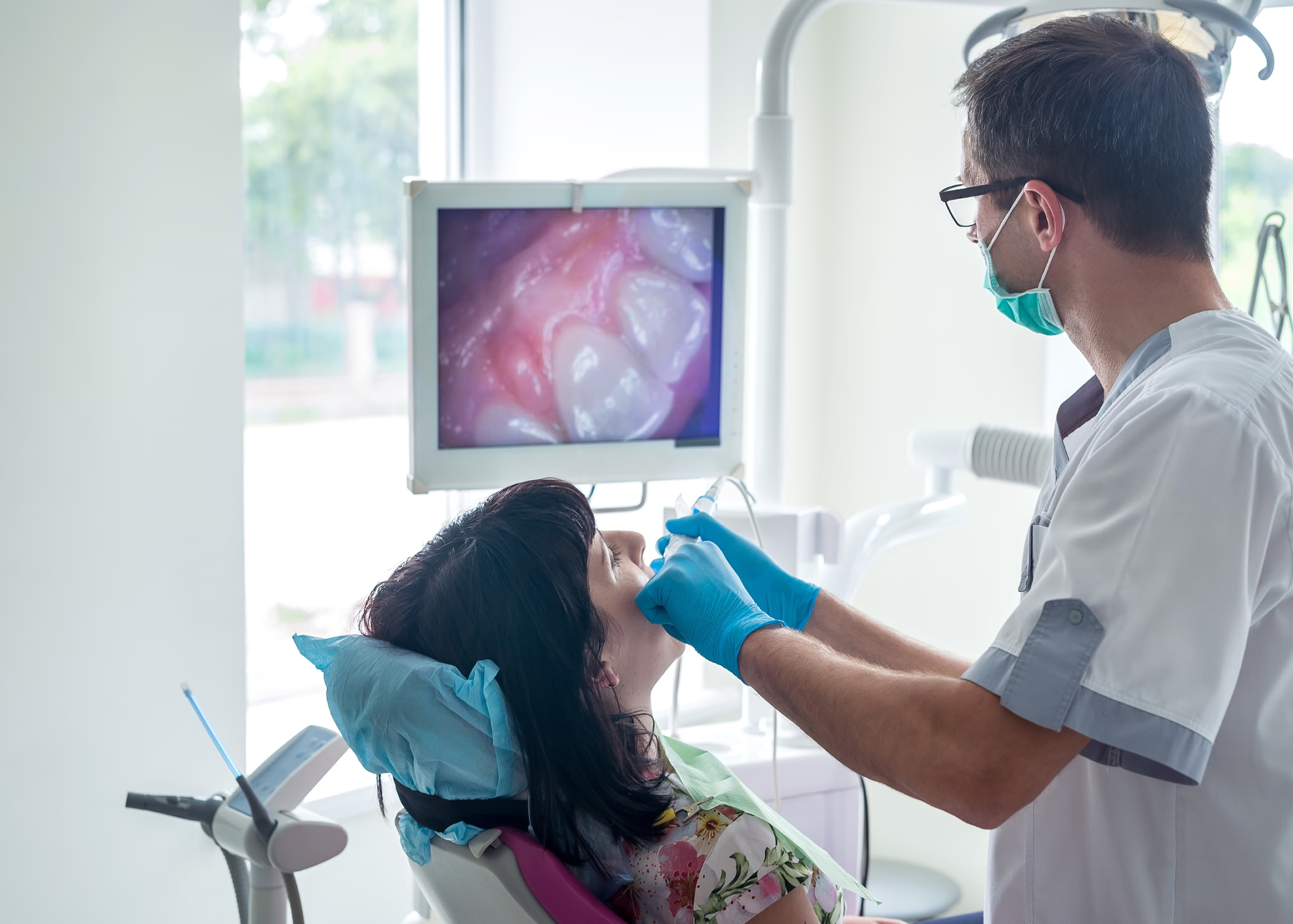
Routine dental hygiene exams give the dental team an opportunity to identify subtle enamel changes, compare X-rays and evaluate a patient’s individual risk for decay.
Factors that may increase cavity risk include:
- Frequent sugary or acidic foods and drinks
- Dry mouth
- Inconsistent brushing or flossing
- Previous cavities
- Deep grooves in the back teeth
- Orthodontic appliances
- Exposed tooth roots
- Certain medications or medical conditions
Identifying both the lesion and the reason it developed is important. Treating one early cavity without changing the conditions that caused it may allow new areas of decay to form.
What Happens During Curodont Treatment?
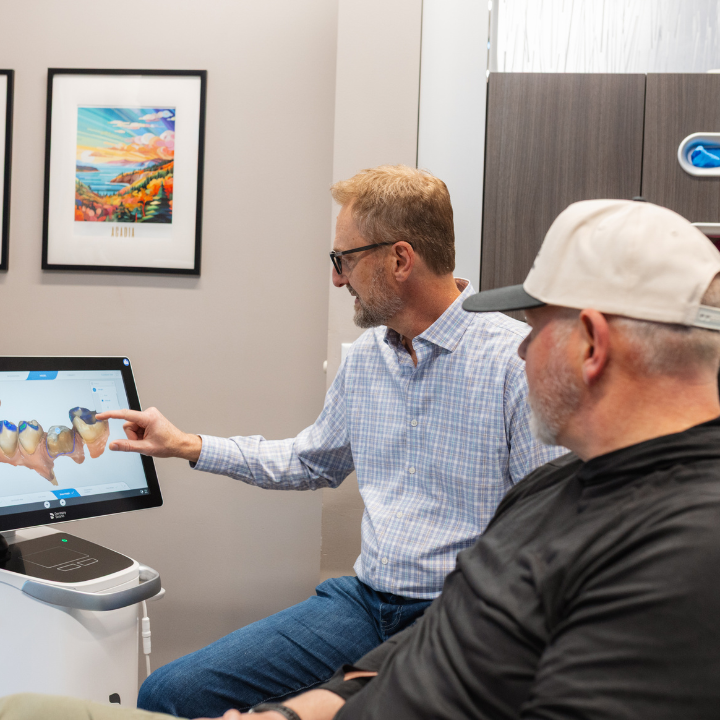
The first step is an examination. Holmes Dental will determine whether the lesion is early enough for remineralization or whether restorative treatment is needed.
When Curodont is appropriate, the general process involves:
- Cleaning the tooth surface
- Isolating the treatment area
- Preparing the early lesion
- Applying Curodont Repair Fluoride Plus
- Allowing the material to penetrate the enamel
- Providing instructions for continued home care
- Monitoring the area during future dental visits
According to Holmes Dental, the application itself can be completed in only a few minutes. The treatment is drill-free, needle-free, tasteless and non-staining.
Patients should follow any eating, drinking or oral hygiene instructions provided after treatment.
Does Curodont Hurt?
Curodont does not require the removal of tooth structure, drilling or an injection of local anesthetic. Most patients should not experience pain during the application.
This can make it especially appealing for children, patients with dental anxiety and anyone who wants to preserve as much natural enamel as possible.
However, a tooth that already hurts may have decay beyond the earliest stage. Pain should always be evaluated rather than assumed to be treatable with Curodont.
What Happens After Treatment?
Curodont supports remineralization over time. The tooth does not instantly change during the appointment, and follow-up is an important part of the process.
Holmes Dental may monitor the area through clinical examinations, imaging or other diagnostic tools. The goal is to confirm that the lesion is stable or improving rather than progressing.
Patients also need to maintain an environment that supports remineralization by:
- Brushing twice daily with fluoride toothpaste
- Flossing between the teeth
- Limiting frequent sugar exposure
- Drinking water regularly
- Attending recommended cleanings and exams
- Using additional fluoride products when prescribed
- Addressing dry mouth or other cavity risk factors
Curodont is most effective as one part of a complete preventive plan.
The Benefits of Treating Decay Early
When used for an appropriate lesion, Curodont may offer several advantages:
- No drilling
- No needles
- Preservation of natural enamel
- A quick application
- Treatment for multiple types of tooth surfaces
- Suitability for children and adults
- Reduced anxiety about cavity treatment
- An opportunity to prevent more extensive dental work
The greatest benefit may be the shift from repairing damage to addressing decay before significant tooth structure is lost.
Find Out Whether Your Cavity Qualifies for Curodont
Not every cavity needs to be treated the same way. At Holmes Dental, Dr. Dan Holmes, Dr. Nicole Holmes and the dental team use modern diagnostic tools and personalized treatment planning to recommend care based on the actual condition of the tooth.
If an area of decay is detected early enough, Curodont treatment may allow the team to strengthen the enamel without drilling. If the cavity has progressed, the team can explain why a filling or another restoration is the more predictable choice.
To schedule an evaluation, contact Holmes Dental or call (970) 221-2499. The office is located at 2133 S Timberline Road, Suite 100, Fort Collins, CO 80525.
Frequently Asked Questions
Curodont is designed to remineralize qualifying early lesions and reduce their risk of progression. The area still needs to be monitored during routine dental visits. Results depend on the condition of the tooth and the patient’s ongoing cavity risk.
Dental pain may indicate that decay has reached a deeper part of the tooth, although other problems can also cause discomfort. The tooth must be examined before a treatment recommendation can be made.
Yes. Holmes Dental offers Curodont for qualifying patients of different ages, including children and teenagers. The dentist must first confirm that the lesion is non-cavitated and appropriate for treatment.
No. It is intended for early decay while the enamel surface is still intact. Cavitated or deeper decay usually requires a filling or another restorative procedure.
The Curodont application can take only a few minutes, although the full appointment also includes evaluation, preparation and patient instructions.
Yes. Brushing with fluoride toothpaste, flossing, controlling sugar exposure and attending regular dental visits remain important after treatment.